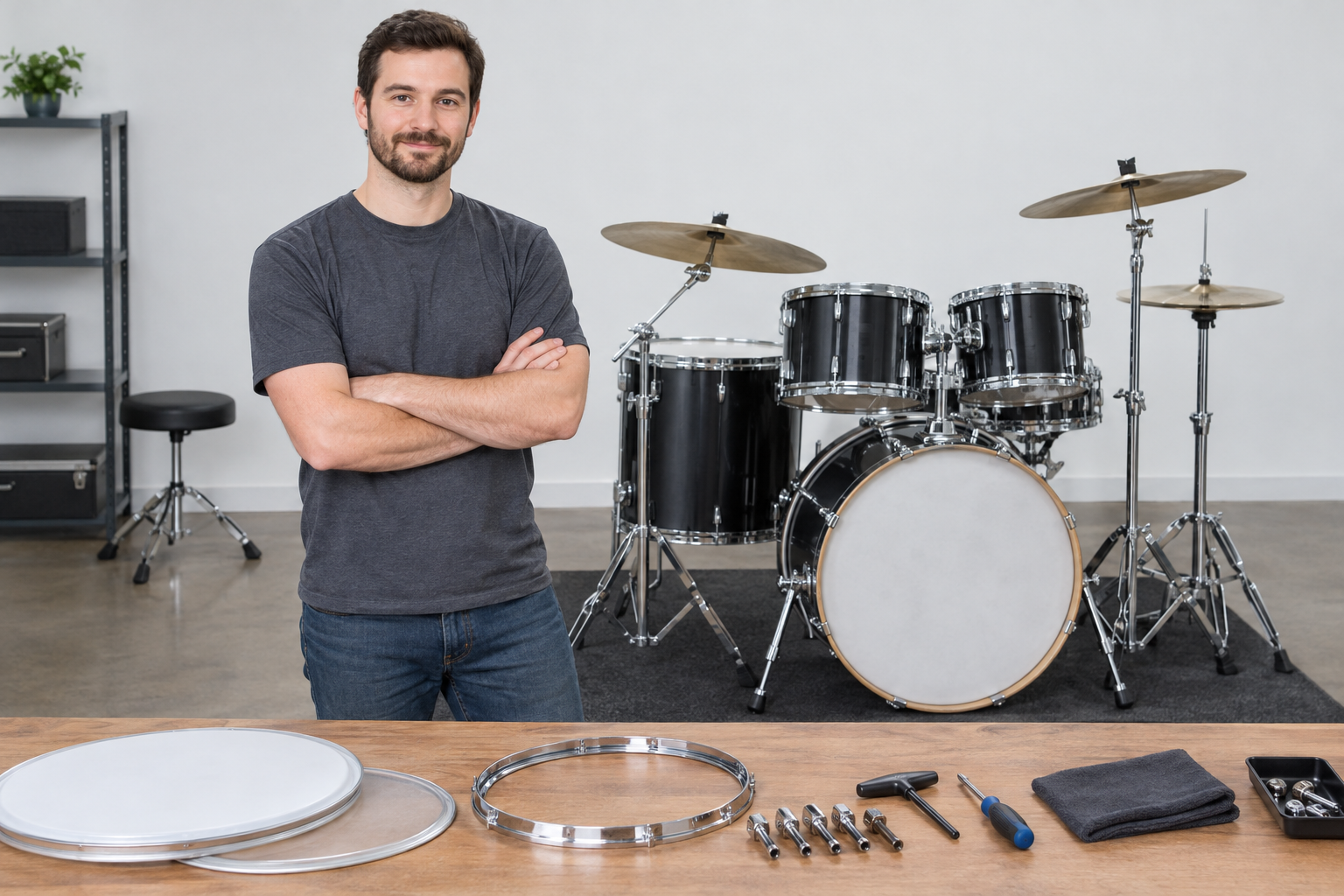

How to choose a replacement drum head
Measure the drum, know which side is which, and pick the sound. Drum set, snare, concert, marching, conga and bongo heads.
On this page
A head fits when it matches the size of the drum and the side it goes on. Get those two right and the rest is about sound.
1. Measure the drum
Measure straight across the top of the drum’s shell, from outside edge to outside edge. Don’t measure the metal hoop around it: it is wider than the head. Heads are sold by that size in inches. A snare drum is usually 13 or 14 inches, toms 8 to 18, and bass drums 18 to 26.
2. Know which side it goes on
- The top head is the one you hit. Drummers call it the batter head.
- The bottom head, or the front head on a bass drum, is the one you don’t hit. Drummers call it the resonant head. It shapes how long the drum rings.
- The bottom of a snare drum takes a very thin head so the snare wires can buzz against it. Always replace it with a snare-side head, never a top head.
3. Pick the sound of the top head
- One layer (single-ply): open and ringing, quick to answer soft playing. Wears out sooner under hard hitting.
- Two layers (two-ply): fuller and shorter, with less ring. Lasts longer for loud or hard playing.
- Coated (white and slightly rough): warmer. You need a coated head to play with brushes.
- Clear: brighter, with more attack.
- With a ring or dot built in: less ring and overtones, without tape or gels on the head.
Not sure? A coated, one-layer top head is the most common choice for a snare drum. Tell us what you play and we’ll suggest heads for the toms and bass drum.
Concert and marching drums
Concert snare and bass drum heads follow the same rules. Timpani heads are sized to the bowl, and marching heads are made for very high tension; both are often made for one maker’s drums. Give us the brand, the model and the size marked on the drum.
Congas, bongos and other hand drums
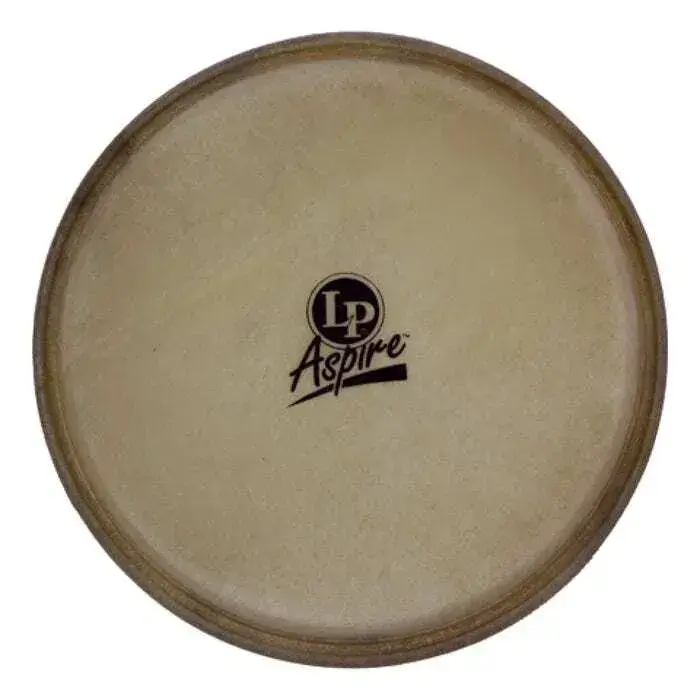
- The maker matters more than the tape measure. Most hand drum heads are fitted to one maker’s rims. Look for a badge on the shell or a sticker inside, and tell us the brand and model.
- Say which drum. Congas come in sizes from small to large: quinto, conga and tumba. Bongos come in pairs, the small macho and the large hembra.
- Rawhide or synthetic. Rawhide sounds warm and traditional, and changes with heat and humidity. Synthetic sounds brighter and stays the same in any weather.
When a head needs replacing
- It is torn or cracked. Replace it before playing again.
- It has dents you can see, or a dull, flat sound that tuning won’t fix.
- The coating is worn through where you hit it.
Ask us
Send us the drum, its size and what you play on the help me find my part form, and we’ll reply with a head and a price. No question is too basic. See drum heads for what to tell us about each kind of drum.
Not sure which part you need? Contact Denver Percussion and we’ll help you get it.