

Remo
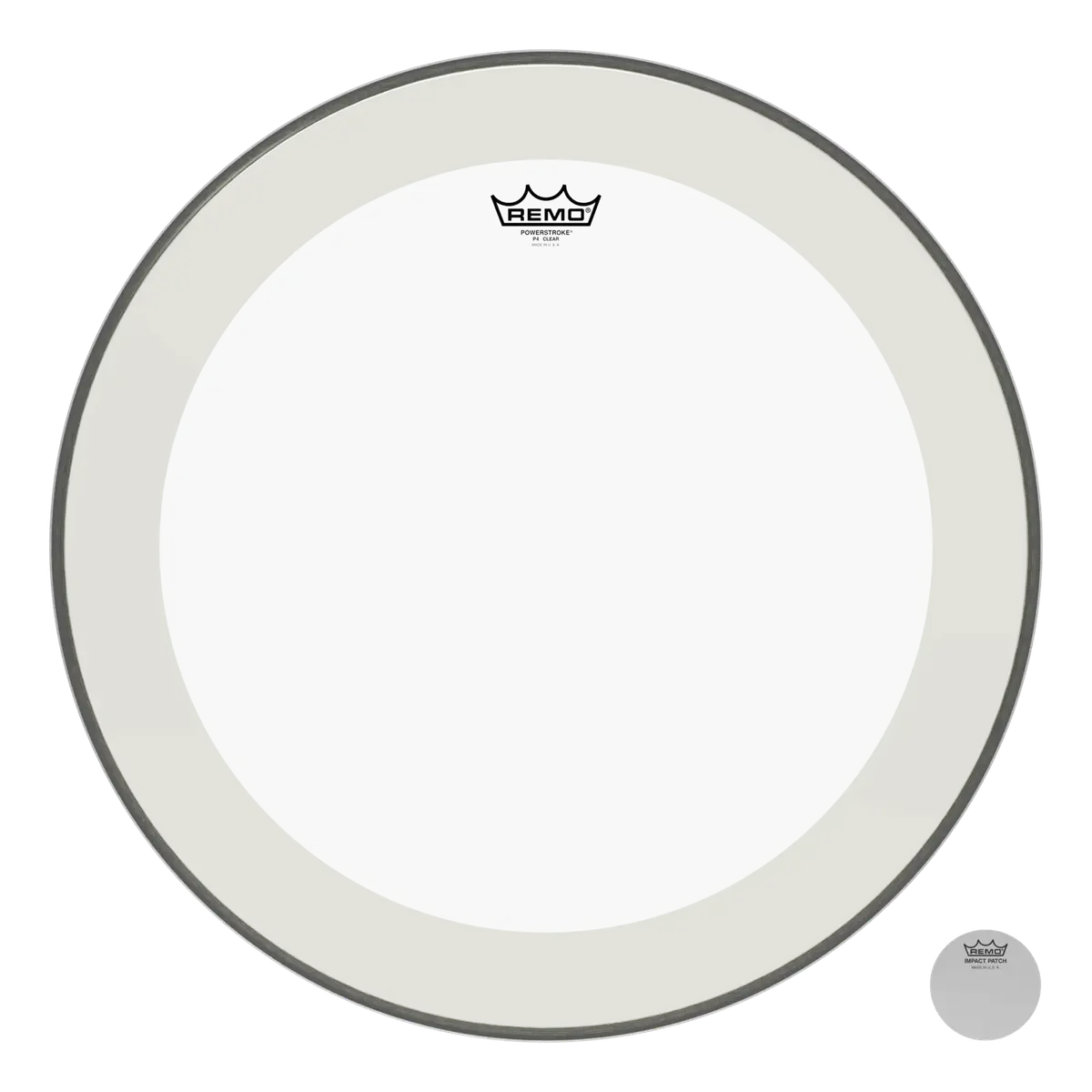
Powerstroke 4 Clear
Punchy and dry, made for loud music and double pedals.
Fits
- Bass drum back · the side the pedal hits
$59.99
Sound
Louder, punchier, more ring. Sticks only.
Look
Clear: see-through. Not sure? Coated is the safe pick.
Drum size Pick one
How to measure your drum
Measure across the top from one outside edge of the shell to the other. Don’t include the metal rim. A 14 inch drum takes a 14 inch head.
How it sounds
- Plies
- 2 ply + inside ring
- Thickness
- 10 mil + 3 mil
- Best for
- Rock, metal, hard hitters
Compare the Powerstroke 4 with similar heads
| Powerstroke 4This head | Silentstroke Bass | Pinstripe Bass | |
|---|---|---|---|
| Plies | 2 ply + inside ring | 1 layer of mesh | 2 ply + edge glue ring |
| Thickness | 10 mil + 3 mil | Mesh | 7 mil each |
| Sound | |||
| About | Punchy and dry, made for loud music and double pedals. | A mesh bass drum head that makes the drum nearly silent. For practice. | Short, fat and controlled, made for a bass drum. |
| Best for | Rock, metal, hard hitters | Practice, quiet rooms | Rock, a tight bass drum |
| Finishes | Coated, Clear | Mesh | Coated, Clear, Ebony |
| Price | From $59.99 | From $44.99 | From $51.99 |
Common questions
Single ply or double ply: which should I buy?
Single-ply heads have one layer of film. They ring longer and answer a light touch. Double-ply heads have two layers. They sound shorter and fatter and last longer under hard playing. Play quietly or want the drum to sing? Single ply. Hit hard or want less ring? Double ply.
Clear or coated: what's the difference?
Coated heads have a thin textured layer on top. It warms the sound, softens the attack, and lets brushes make a sound. Clear heads are bare film: brighter, more attack, and brushes slide off them. Most school snares use coated.
White or black coating: does color change the sound?
Mostly it changes the look. Black and Ebony heads can sound a touch darker on some lines. Smooth White is white without the texture, so it is a little brighter than Coated.
How do I measure my drum for the right size?
Measure across the top of the drum from one outside edge of the shell to the other, not the metal rim. Heads are sized by the drum: a 14 inch snare takes a 14 inch head.
Which side is the top (batter) and which is the bottom (resonant)?
The top, or batter, head is the one you hit. The bottom, or resonant, head is on the other side. On a snare it is the very thin head the wires touch. On a bass drum the batter is the side the pedal hits and the resonant faces the audience.
Do I need to replace both heads?
Usually not. The top head wears out first. Replace the bottom when it is dented, torn, or the drum will not tune up.
How often should a school replace its snare head?
With daily use, about once a year, or sooner when the coating wears through in the middle or you see a dent.